Development of a Green Finance Taxonomy in Senegal
Preparing the roadmap for a taxonomy that will help achieve Senegal’s development objectives
-

Photo by Kiikanla on Freeimages.com

September 15, 2023
The development of sustainable or green finance taxonomies gained strength since the COVID-19 pandemic as many countries opted for a low-carbon and biodiversity-friendly economic recovery. This is due to the fact that taxonomies provide a conducive framework for the necessary shift of public and private capital flows away from environmentally harmful activities into environmentally friendly investments, playing a crucial role in aligning investment trajectories with national and global development goals (please see “When Finance Talks Nature”).
What?
For Senegal to achieve the objectives set out in its new development framework (the “Plan Sénégal Emergent”), substantial annual investments will be needed. Only then can the country’s economy move towards a path of strong, inclusive, and sustainable growth, while preserving the country’s environment and natural resources. Sustainable finance plays a crucial role in the forward-looking vision of the “Plan Sénégal Émergent”; thus Senegal has joined the International Platform on Sustainable Finance and decided to develop a green finance taxonomy with the aim of attracting more sustainable investments.
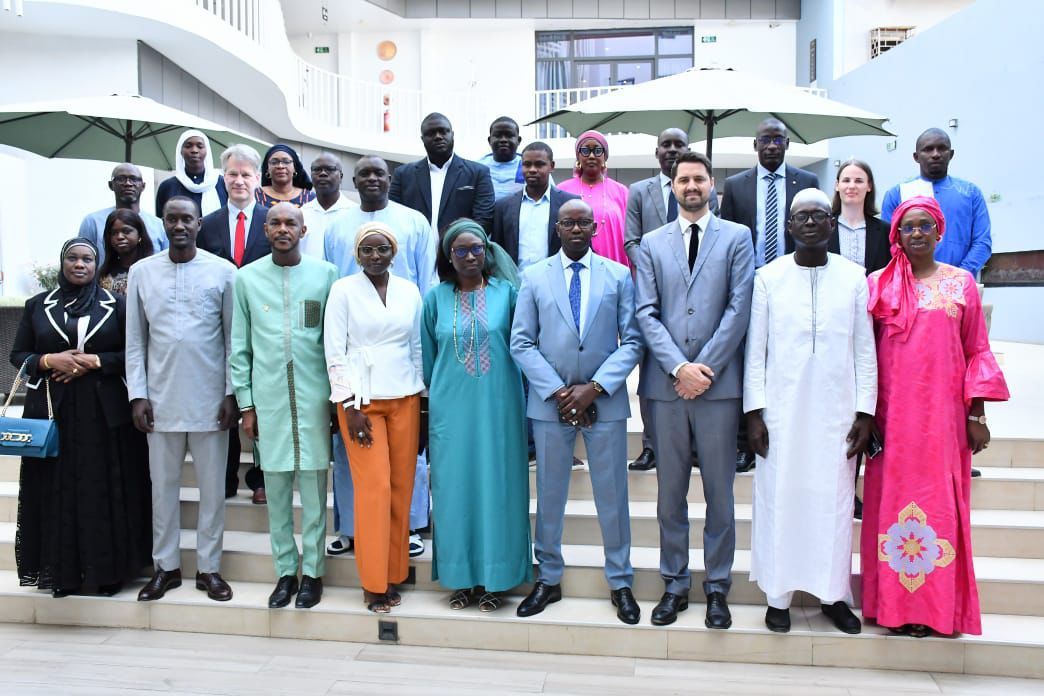
Together with the German Development Cooperation (GIZ), the Senegalese Ministry of Environment, Sustainable Development and Ecological Transition (MEDDTE) and the Senegalese Ministry of Finance and Budget (MFB), Climate & Company and its Senegalese partner organisation, the Consortium pour la Recherche Economique et Sociale (CRES), are currently developing Africa’s third green finance taxonomy, which will also be the first taxonomy in the French language.
How?
The assignment has the following objectives:
- Build the capacities of all local stakeholders on sustainable finance taxonomies;
- Establish an appropriate governance structure that will drive the taxonomy development process forward;
- Identify the potential taxonomy objectives, methodology, scope, and priority sectors, based on the Senegalese socio-economic and political context, and analyse approaches to ensure international taxonomy interoperability and alignment; and
- Prepare a roadmap for the Senegalese Green Finance Taxonomy that can be used as foundation for the next taxonomy development phase.
Key Takeaways
Our work produced practical recommendations for a credible, locally relevant and internationally interoperable green finance taxonomy for Senegal.
Ground the taxonomy in national priorities
The taxonomy should reflect Senegal’s climate commitments, economic structure and development plans. The recommended first phase focuses on climate mitigation and adaptation, with the potential to add biodiversity and the protection of aquatic and marine resources later. 4
Combine local relevance with international comparability
Senegal can adapt lessons from existing taxonomies while defining criteria suited to national policies, markets and data availability. Recognised activity classifications and common principles can improve transparency, interoperability and access to cross-border sustainable finance. 4
Build inclusive governance and track financial flows
Successful implementation requires clear responsibilities and sustained participation from government, financial institutions, businesses, technical experts and civil society. Connecting the taxonomy with Senegal’s future climate-finance monitoring system could also reveal which priority sectors receive investment and where financing gaps remain.
Blue economy and water: translating national priorities into investment opportunities
Water and ocean-related activities emerged as an important cross-cutting theme in our work. The proposed taxonomy scope includes fisheries, water and sanitation, flood management and coastal-zone management. These sectors connect climate adaptation with food security, employment, biodiversity and the resilience of coastal communities.
Senegal’s sustainable-finance framework already provides a foundation by recognising coastal preservation, climate adaptation and the sustainable management and resilience of marine and coastal ecosystems as eligible environmental purposes. 1
Potential areas for taxonomy-aligned investment include:
- sustainable fisheries and recovery of fish stocks;
- climate-resilient marine and integrated aquaculture;
- mangrove, reef and coastal-habitat restoration;
- marine protected areas and protected fishing zones;
- measures against illegal and unreported fishing;
- cleaner fish-processing technologies;
- marine-weather and coastal early-warning systems;
- water supply, sanitation and flood management.
Our analysis also considered blue bonds, whose proceeds finance projects or assets connected to marine and coastal industries and ecosystems. A taxonomy can give these instruments credibility by defining eligible activities, environmental safeguards and reporting expectations.
A well-designed taxonomy can turn Senegal’s blue-economy priorities into transparent investment opportunities—connecting blue bonds and other financial instruments with credible activities, safeguards and measurable outcomes.
Get in touch