
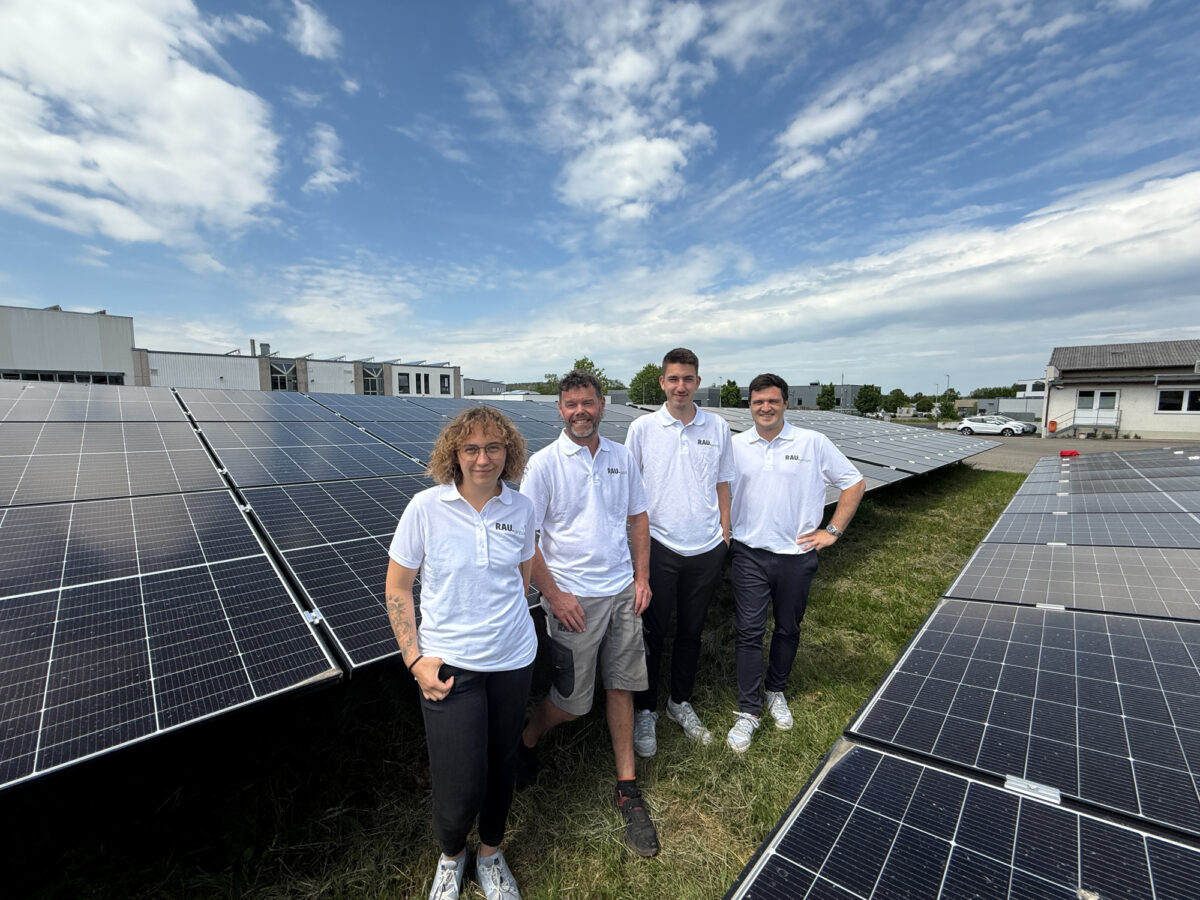
“The energy crisis was a wake-up call for us.”
April 16, 2026
The German family business RAU GmbH used sustainability data to reduce energy costs. They invested millions to switch their high energy consumption to renewable energy generated on-site. Their investment decisions where backed-up by data from their sustainability reporting.
As a manufacturing SME, RAU GmbH is highly energy-intensive: electricity consumption, process and building heating were the largest cost drivers for years. In 2022, amid the energy crisis, energy costs rose by 101% compared to the previous year. And this was despite the fact that the family-owned company had reduced its electricity consumption by 12%. This highlighted just how dependent the company was on external suppliers and fossil fuels. Furthermore, without a clear climate strategy, the company risked damaging its reputation among customers and specialty retail partners, who are increasingly demanding proof of sustainability.
Sustainability reporting was a driver of optimisation
By analyzing consumption data (electricity, gas, load profiles), RAU was able to identify where the greatest costs arise and where quick wins can be achieved. This analysis served as the basis for investment decisions and enabled realistic profitability calculations. The reporting also helped create transparency for management and external stakeholders, providing the clarity needed to successfully implement a project of this scale.
Sustainability data helped secure financing
Thanks to the detailed data analysis, RAU GmbH was able to secure better loan terms for financing its battery storage system and PV system. With the commissioning of the PV system in September 2024 and its connection to the power grid, they were able to significantly increase its share of self-generated electricity, reducing both costs and emissions.
Read the full case study an RAU’s energy transition backed by sustainability data here:
Find more examples of how sustainability reporting can become a business case in our resource library.
Get in touch